

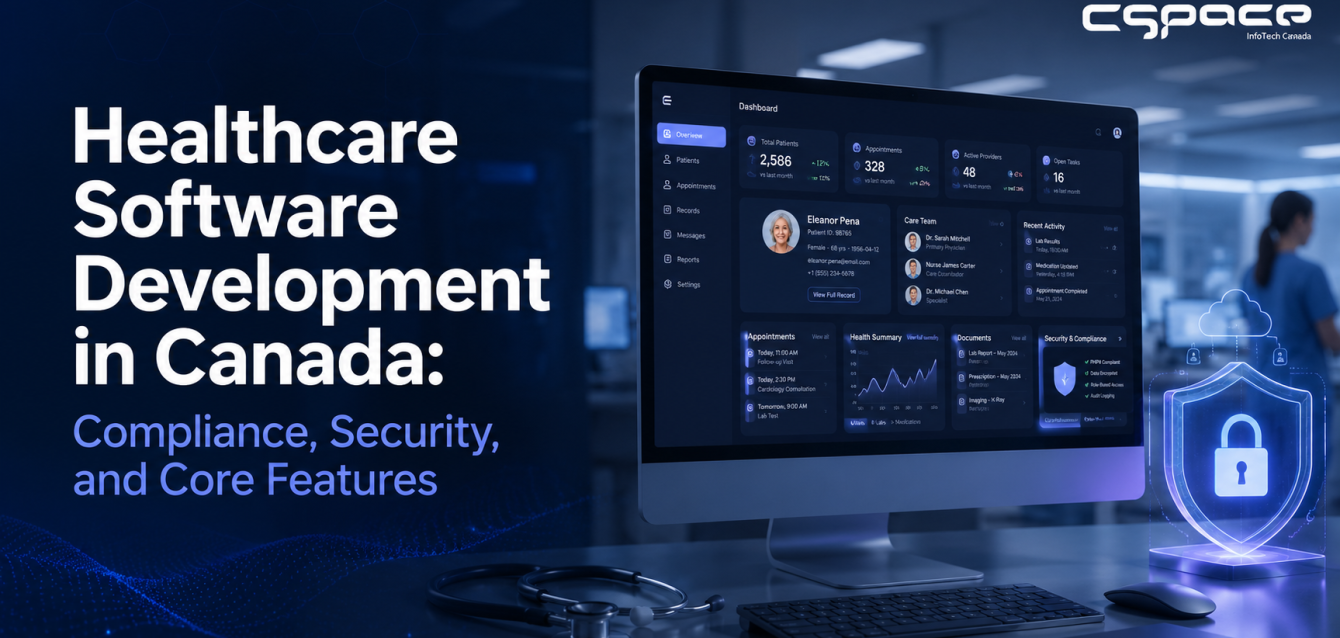
Healthcare in Canada is becoming more digital every year. Clinics, hospitals, pharmacies, diagnostic centers, wellness providers, and healthtech startups are using software to manage appointments, patient records, billing, communication, reporting, remote care, and internal operations. But healthcare software is different from regular business software.
It handles sensitive personal health information. It supports real patient care. It may connect with clinical workflows, medical records, insurance processes, lab systems, or virtual care platforms. That means every healthcare software project in Canada must be planned with compliance, privacy, security, usability, and reliability from the beginning.
For healthcare organizations, the goal is not just to build a good-looking app or dashboard. The goal is to build a secure, compliant, and practical system that helps providers work better while protecting patient trust.
Why Healthcare Software Development in Canada Needs Special Attention
Healthcare software must support both business operations and patient care. A regular booking system or CRM may not be enough when the platform stores patient information, medical notes, prescriptions, lab results, treatment history, billing records, or communication logs.
In Canada, healthcare software may need to consider federal privacy requirements, provincial health privacy laws, medical device regulations, data residency expectations, cybersecurity standards, accessibility, and internal clinical policies.
For example, PIPEDA applies to private-sector organizations across Canada that collect, use, or disclose personal information during commercial activities. In Ontario, PHIPA establishes rules for the collection, use, and disclosure of personal health information.
This is why healthcare software development in Canada should never start with only UI screens. It should start with process mapping, privacy planning, security architecture, and compliance review.
Key Compliance Areas for Healthcare Software in Canada
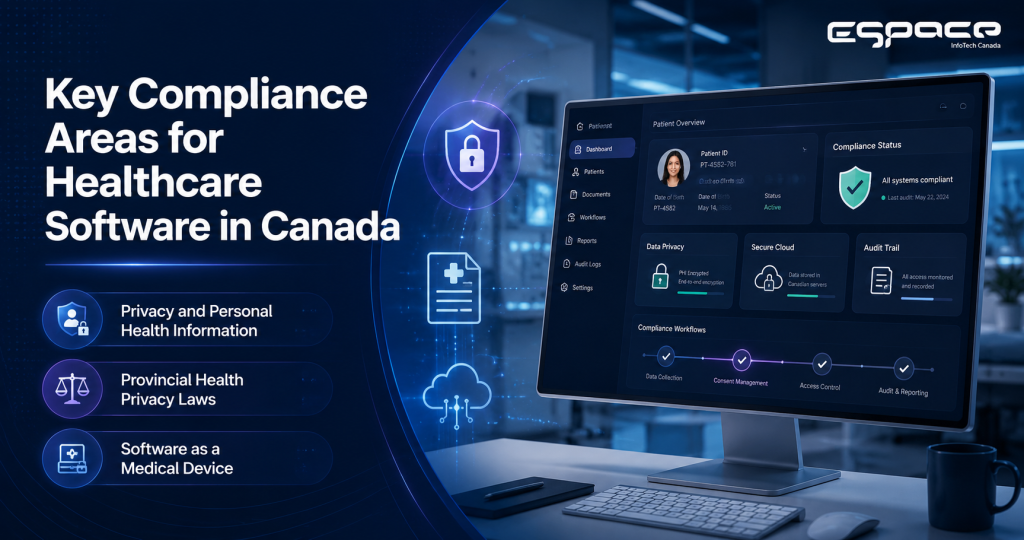
1. Privacy and Personal Health Information
Healthcare software often collects personal health information such as names, contact details, medical history, diagnostic information, treatment notes, prescriptions, appointment records, and billing information.
This information must be collected and used responsibly. Healthcare platforms should include privacy controls, consent management, access permissions, data retention rules, audit logs, and secure communication methods.
Under PIPEDA, organizations need to understand their responsibilities when collecting, using, or disclosing personal information in commercial activities. For healthcare businesses operating in specific provinces, provincial privacy laws such as Ontario’s PHIPA may also apply. PHIPA specifically focuses on personal health information and health information custodians.
2. Provincial Health Privacy Laws
Canada’s healthcare privacy landscape is not one-size-fits-all. Provinces may have their own laws and expectations for handling personal health information.
For example, Ontario healthcare organizations often need to consider PHIPA. Other provinces also have their own health privacy frameworks. This means a healthcare software platform built for clinics in Ontario may need different compliance planning than one used across multiple provinces.
For businesses planning national healthcare software, compliance should be reviewed province by province. Tiny shortcut here can become a big headache later — and healthcare headaches are not the type any clinic wants.
3. Software as a Medical Device
Not every healthcare app is considered a medical device. A clinic appointment system, patient portal, or admin dashboard may simply support operations. But software that diagnoses, monitors, predicts, recommends treatment, or supports clinical decision-making may fall into a different category.
Health Canada provides guidance on Software as a Medical Device, also known as SaMD, to clarify how software fits into Canada’s medical device regulatory framework. If the software has medical decision-making functions, the development team should assess whether Health Canada medical device rules may apply before development goes too far.
Security Requirements for Healthcare Software
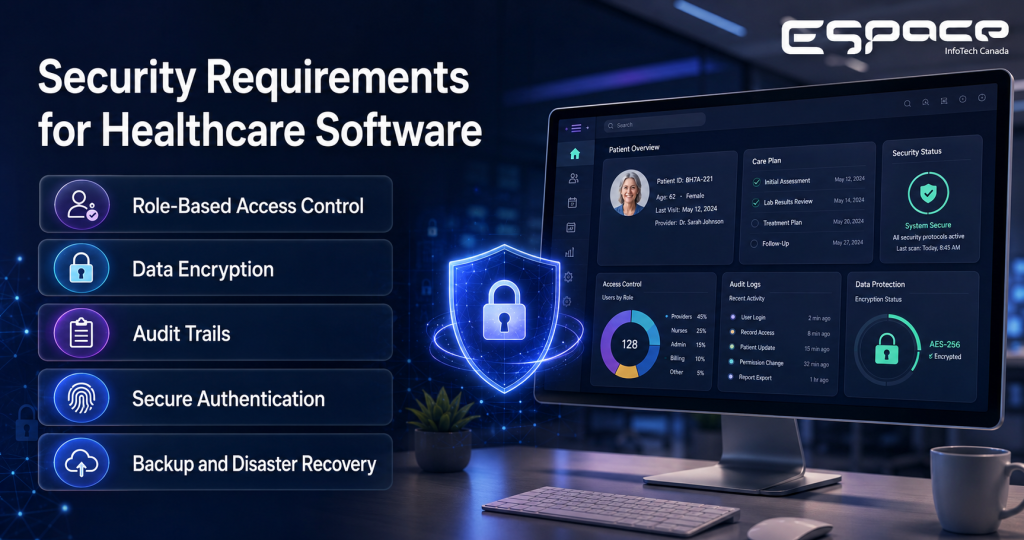
1. Role-Based Access Control
Not every user should see everything. A doctor, nurse, receptionist, admin, billing officer, lab technician, and patient should all have different access levels.
Role-based access control helps prevent unnecessary exposure of patient information. For example, a receptionist may need appointment details, but not full clinical notes. A billing user may need invoice data, but not diagnostic records.
2. Data Encryption
Healthcare data should be protected both in transit and at rest. This means secure HTTPS communication, encrypted databases, encrypted backups, and secure file storage. Encryption is not a “nice-to-have” feature in healthcare. It is part of the foundation.
3. Audit Trails
Healthcare platforms should track who accessed what, when, and what action was taken. Audit logs help organizations monitor unusual activity, investigate incidents, and support accountability. A proper audit trail may track logins, record views, data edits, prescription changes, appointment updates, file downloads, failed login attempts, and admin actions.
4. Secure Authentication
Healthcare software should use strong authentication methods. This may include multi-factor authentication, secure password policies, session timeout, device controls, and login activity monitoring. For patient-facing apps, authentication must also be simple enough for real users. Security is important, but if the login process feels like solving a puzzle from another planet, adoption will suffer.
5. Backup and Disaster Recovery
Healthcare systems need strong backup and recovery planning. A clinic cannot afford to lose patient records or appointment history because of a server failure, cyberattack, or accidental deletion. A secure healthcare platform should include automated backups, recovery testing, downtime planning, and clear incident response procedures.
Core Features of Healthcare Software in Canada
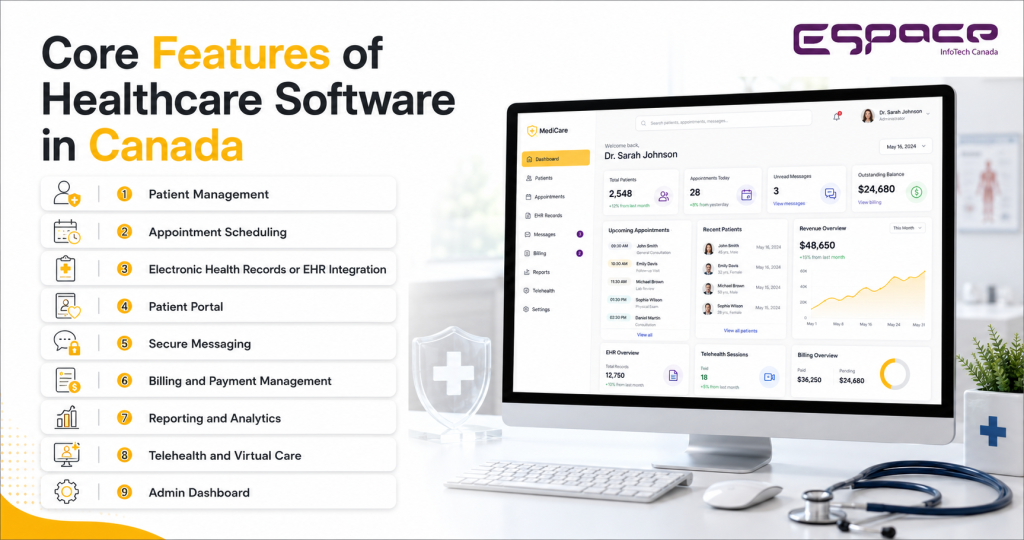
1. Patient Management
A strong healthcare platform should allow providers to manage patient profiles, contact details, medical history, documents, notes, appointments, prescriptions, and communication records from one secure place. The system should be easy to search, update, and manage without creating data duplication.
2. Appointment Scheduling
Appointment scheduling is one of the most common healthcare software features. It should support online booking, provider calendars, appointment reminders, cancellation rules, recurring visits, waitlists, and multi-location scheduling. For clinics, this can reduce manual calls and improve patient experience.
3. Electronic Health Records or EHR Integration
Many healthcare organizations already use EHR or EMR systems. New software should be planned around integration needs instead of creating another disconnected database. Possible integrations may include patient records, lab results, prescriptions, billing, referrals, insurance data, and reporting systems.
4. Patient Portal
A patient portal can improve communication and reduce admin workload. Patients can view appointments, update personal information, access reports, upload documents, receive reminders, and communicate securely with the clinic. For Canadian healthcare providers, the patient portal should be simple, accessible, mobile-friendly, and privacy-focused.
5. Secure Messaging
Healthcare communication should not depend only on regular email or unsecured messaging apps. A healthcare platform can include secure messaging between providers and patients, internal staff chat, notification history, and document sharing. This helps reduce fragmented communication and supports better record keeping.
6. Billing and Payment Management
Healthcare software may need billing features depending on the organization. This can include invoices, insurance claims, private payments, service packages, payment history, tax rules, and reporting. For private clinics, wellness providers, dental clinics, physiotherapy centers, and specialty practices, billing automation can save significant admin time.
7. Reporting and Analytics
Healthcare leaders need visibility into operations. Useful reports may include appointment volume, patient activity, provider performance, revenue, cancellations, referral sources, wait times, treatment trends, and staff productivity. Reports should be clear, visual, and easy to export when needed.
8. Telehealth and Virtual Care
Virtual care is now a normal part of healthcare delivery. A healthcare platform may include secure video consultation, appointment reminders, digital intake forms, online prescriptions, follow-up notes, and secure file exchange. For telehealth, security and usability must work together. Patients should not need technical training just to join a consultation.
9. Admin Dashboard
The admin dashboard should give clinic managers and healthcare teams a clear view of operations. It may include upcoming appointments, patient requests, unread messages, billing status, provider schedules, system alerts, and performance summaries. A good dashboard does not show everything. It shows what matters first.
How to Build Healthcare Software the Right Way
Start with discovery. Understand the healthcare organization’s workflow, users, compliance needs, patient journey, internal pain points, reporting requirements, and integration environment. Then define the system architecture. Decide what data will be stored, where it will be hosted, how access will be controlled, how logs will be maintained, and how backups will work.
Next, design the user experience around real healthcare workflows. A patient intake form, provider dashboard, and admin calendar should be simple, fast, and logical. After that, develop the system with privacy and security built into the foundation. Add encryption, access control, audit trails, secure authentication, and strong testing.
Finally, test with real users before launch. Healthcare software should be tested for usability, security, performance, accessibility, workflow accuracy, and data protection.
How Espace Infotech Canada Can Help
Espace Infotech Canada Inc. helps healthcare businesses, clinics, startups, and service providers design and develop secure, scalable, and user-friendly digital solutions.
Our team can support:
- Healthcare software planning
- Clinic management system development
- Patient portal development
- Appointment booking systems
- Secure dashboard design
- Healthcare mobile app development
- EHR/EMR integration planning
- Billing and reporting modules
- Workflow automation
- Custom SaaS development for healthtech businesses
We focus on building software that is practical for teams, simple for users, and ready for long-term growth.
Conclusion
Healthcare software development in Canada requires more than technical skills. It needs privacy awareness, strong security planning, regulatory understanding, and a deep focus on real healthcare workflows.
The best healthcare software is not just feature-rich. It is secure, compliant, easy to use, and built around patient trust.
If your healthcare organization is planning to build or modernize a digital platform, now is the right time to think beyond basic software and create a system that supports better care, safer data handling, and smoother operations.
Espace Infotech Canada Inc. can help you build secure, scalable, and custom healthcare software for the Canadian market. Let’s create a digital healthcare solution that works for your team and protects your patients.
FAQ
What laws should healthcare software consider in Canada?
Healthcare software may need to consider PIPEDA, provincial health privacy laws such as Ontario’s PHIPA, and Health Canada medical device rules if the software performs medical device functions.
Is every healthcare app considered medical device software?
No. A booking system or patient portal may not be medical device software. But software that supports diagnosis, monitoring, treatment recommendations, or clinical decision-making may need further regulatory review under Health Canada’s SaMD guidance.
What are the most important security features in healthcare software?
Important security features include encryption, role-based access control, audit logs, secure authentication, data backups, incident response planning, and secure communication.
What features should a clinic management system include?
A clinic management system may include patient profiles, appointment scheduling, provider calendars, medical notes, billing, patient portal, secure messaging, reports, document management, and admin dashboards.